
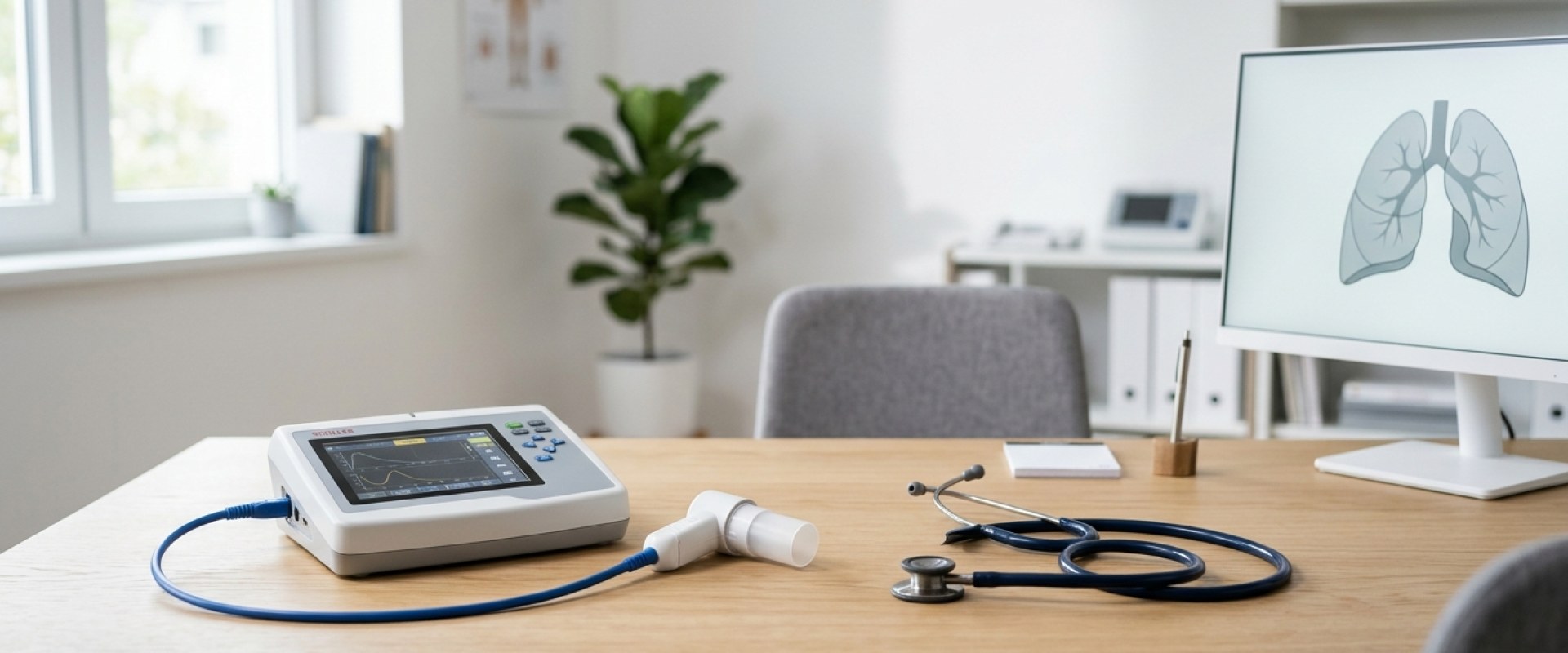
Spirometry Testing in Point Cook
Spirometry is a breathing test that measures how well air moves out of your lungs. It is one of the main tests used to diagnose and monitor asthma and chronic obstructive pulmonary disease (COPD).
The numbers it produces
Two measurements matter most. FEV1 is the amount of air you can force out in the first second of a hard breath out. FVC is the total amount you can blow out in one full breath.
Dividing FEV1 by FVC gives a ratio. When that ratio is low, air is struggling to get out through narrowed airways, which is called obstruction. Each result is compared with predicted values for a person of your age, height and sex, so a number only means something alongside that comparison.
Reasons a doctor may suggest it
- Coughing, wheezing or shortness of breath lasting several weeks
- Suspected asthma, or suspected COPD including emphysema
- Seeing how well a lung medicine is working
- Years of smoking, or of breathing in dust and fumes at work
Testing before and after a reliever
The breathing test is often done twice: once as is, and again about 15 minutes after a few puffs of a reliever medicine. If breathing improves a lot after the reliever, asthma is more likely. Obstruction that remains afterwards fits with COPD.
Even a normal result on one day does not rule out asthma, because asthma comes and goes. Repeat testing, or other tests, may be needed to find the cause of symptoms.
Getting ready
- Wear loose clothing that lets your chest and belly expand
- Do not smoke or vape for at least an hour beforehand
- Skip a large meal in the two hours before, and avoid hard exercise just before
- Call reception to check if you should pause any inhalers first
- Bring a list of your medicines, including puffers
How the blowing works
First, a soft clip goes on your nose so air only leaves through your mouth. You seal your lips around a clean mouthpiece, breathe in as deeply as you can, then blast the air out as hard and fast as possible and keep pushing until your lungs feel empty. Spirometry is a coached test, and at least three good efforts are normally needed for a reliable result.
Some people feel light-headed or cough after blowing hard. It settles within a minute or two, and resting between attempts helps.
When the test should wait
Forceful breathing puts pressure on the chest, eyes and abdomen. Testing is usually postponed after recent eye, chest or abdominal surgery, a recent heart attack, a collapsed lung, coughing up blood or a current chest infection. Mention any of these when you book.
Tracking your lungs over time
For someone with asthma or COPD, one test is a snapshot. Comparing results over months and years shows whether lung function is stable, dropping or improving after a change in treatment. Ask for a copy of each report and keep them together, so specialists, physiotherapists or a pulmonary rehabilitation team can see the trend.
If the answer is still unclear
Not every question is settled by this test. When results are borderline, or symptoms do not match them, a referral to a hospital or private respiratory laboratory may follow. Full lung function tests there can measure total lung volume and how well oxygen passes into the blood. For suspected asthma with normal spirometry, a bronchial challenge test checks how sensitive the airways are.
Fees and bulk billing
Out-of-pocket fees apply to most consultations, and each practitioner sets their own fees. Bulk billing is available with all our doctors for Veterans’ Affairs patients, pensioners over 65, childhood and adult immunisations and GP care plans. See our fees page or call reception before you book.