
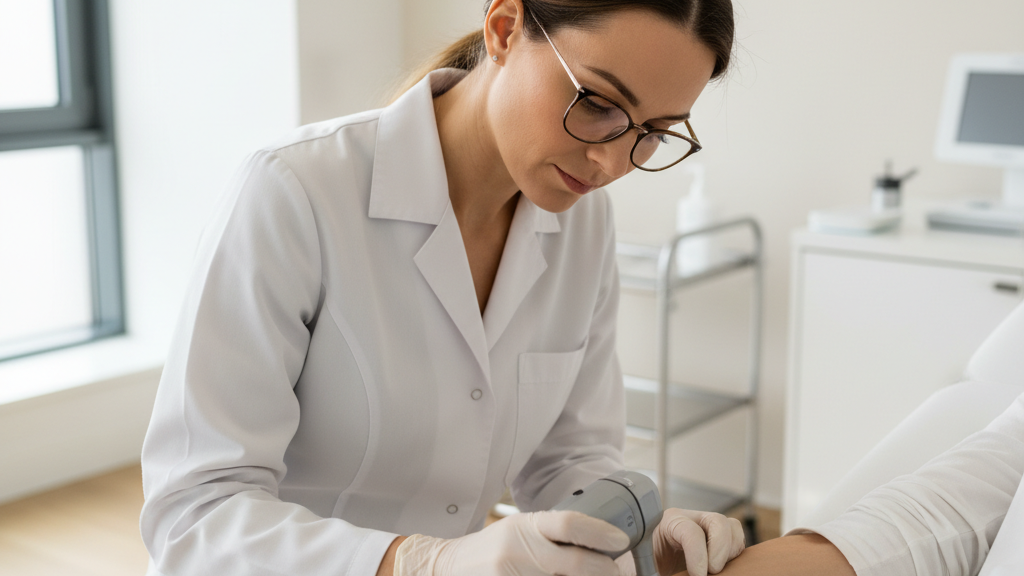
Australia’s beautiful sunshine is a part of our identity, but it also comes with a significant health responsibility: managing our risk of skin cancer. Here at Juniper Avenue Medical Centre, we understand the importance of proactive health measures, especially for your skin. We’re dedicated to providing thorough and accessible skin checks residents can rely on for early detection.
Skin cancer is one of the most common cancers in Australia, yet with early detection, it is often highly treatable. That’s why making regular skin checks a routine part of your health care is not just recommended, it’s essential. Our GPs in Point Cook are here to help you navigate this vital aspect of your health.
Key Takeaways
- Regular skin checks are vital for early detection of skin cancer, especially in Australia, where rates are high.
- Juniper Avenue Medical Centre offers comprehensive skin assessments, including minor lesion removal, with a patient-centred approach.
- Understanding your personal risk factors and knowing what to look for can significantly improve outcomes.
Why Regular Skin Checks are Crucial for Australians
Living in a sun-drenched country like Australia means we’re all exposed to higher levels of UV radiation. This exposure significantly increases our risk of developing skin cancers, including melanoma, basal cell carcinoma (BCC), and squamous cell carcinoma (SCC). Regular skin checks are your best defence, allowing for the early detection of suspicious lesions before they become more serious.
Catching skin cancer in its initial stages often leads to simpler treatments and a much better prognosis. Waiting too long can mean and a greater risk of the cancer spreading. Don’t leave your skin health to chance; make a proactive choice for your well-being.
The Australian Context: A Sun-Kissed Nation
Australia has one of the highest rates of skin cancer in the world. This stark reality underscores why vigilance and regular professional checks are so important for every Australian, regardless of age or skin type. Our lifestyle, with its emphasis on outdoor activities, means we need to be particularly mindful of sun protection and skin surveillance.
Many Australians have fair skin types that are more susceptible to sun damage. Even those with darker complexions are not immune to skin cancer. It’s a health issue that truly affects our entire community, making local access to expert skin checks Point Cook a critical service.
Understanding the Risks
Several factors can increase your risk of developing skin cancer. These include a history of sunburns, extensive sun exposure over your lifetime, a large number of moles, a family history of skin cancer, and having fair skin that burns easily. Understanding your personal risk profile is the first step towards effective prevention and early detection.
At Juniper Avenue Medical Centre, our GPs will discuss your individual risk factors during your appointment. This personalised approach helps us tailor our advice and recommendations, ensuring you receive the most relevant and effective care for your skin health journey.
What Happens During a Professional Skin Check at Juniper Avenue
A professional skin check at Juniper Avenue Medical Centre is a thorough and systematic examination designed to identify any suspicious moles or lesions. Our aim is to provide a comfortable and reassuring experience, ensuring you feel informed and cared for every step of the way. We utilise modern techniques to provide a comprehensive assessment.
Our GPs are trained to identify the subtle signs of skin cancer that might be missed during a self-examination. This professional eye, combined with specialised tools, significantly enhances the accuracy of detection. Your health is our top priority.
Your Comprehensive Assessment
When you come in for a skin check, your GP will typically begin by taking a detailed history of your skin health. This includes asking about any new or changing moles, your sun exposure history, and any family history of skin cancer. This information helps us understand your individual risk profile.
Following the discussion, you’ll be asked to undress to your underwear so the doctor can conduct a full body examination. This allows for a thorough inspection of your skin from head to toe, including areas not typically exposed to the sun. We understand this can feel a little daunting, and we strive to create a respectful and private environment.
Advanced Techniques for Accuracy
During the examination, your GP may use a dermatoscope – a specialised magnifying tool – to closely examine any moles or lesions that appear suspicious. This instrument allows for a much clearer view of the pigment and structure within the skin, aiding in the differentiation between benign and malignant growths.
If a suspicious lesion is identified, your GP will discuss the next steps with you. This might involve digital photography for monitoring, a biopsy for further laboratory analysis, or immediate removal. Our goal is always to ensure the most appropriate and timely management for your specific situation.
Recognising the Warning Signs: What to Look For
While professional skin checks are crucial, knowing how to conduct regular self-examinations and what to look for is also incredibly important. Being familiar with your own skin can help you spot changes between your professional appointments. The sooner a change is noticed, the better the outcome typically is.
Empowering yourself with this knowledge is a key part of proactive skin health management. Don’t hesitate to book an appointment with our GPs in Point Cook if you notice anything unusual. It’s always better to get a suspicious spot checked early.
The ABCDEs of Melanoma
The ABCDE guide is a helpful tool for identifying potential melanoma. It focuses on changes in moles or new spots. Remember, not all melanomas follow these rules, but they are good indicators to be aware of:
- Asymmetry: One half of the mole does not match the other.
- Border irregularity: The edges are ragged, notched, or blurred.
- Colour variation: The mole has different shades of brown, black, tan, red, white, or blue.
- Diameter: The mole is larger than 6 millimetres (about the size of a pencil eraser).
- Evolving: The mole is changing in size, shape, colour, or elevation, or you notice new symptoms like bleeding, itching, or crusting.
If you observe any of these characteristics, it’s essential to seek medical advice promptly. Our team at Juniper Avenue Medical Centre is here to provide expert assessment and guidance.
Beyond Melanoma: Other Skin Cancers
While melanoma is the most serious form of skin cancer, basal cell carcinoma (BCC) and squamous cell carcinoma (SCC) are far more common. BCCs often appear as a pearly lump or a red, scaly patch, while SCCs can look like a firm, red nodule or a flat, scaly patch that bleeds easily.
These non-melanoma skin cancers are usually less aggressive but still require timely treatment. Any new growth, sore that doesn’t heal, or persistent patch on your skin should be investigated by a doctor. Our GPs can help identify all types of skin cancer.
Statistics show that over 2,000 Australians die from skin cancer each year. However, more than 95% of skin cancers are curable if detected early. This highlights the profound impact of regular checks on saving lives and reducing the burden of disease.
Don’t delay your vital skin check. Our friendly team is ready to assist you.
Our Skin Cancer Services in Point Cook
Juniper Avenue Medical Centre is proud to offer a range of skin cancer services right here in Point Cook. From initial assessment to advanced diagnostic tools and minor surgical procedures, we aim to provide a seamless and effective pathway for your skin health needs. Our focus is always on delivering high-quality, patient-centred care.
We believe that easy access to these critical services is paramount for our community. Our GPs work diligently to ensure you receive the best possible care, utilising the latest medical knowledge and equipment. Trust us to be your partner in maintaining healthy skin.
Minor Surgical Procedures On-Site
Should a suspicious lesion require further investigation or removal, our medical centre is equipped to perform various minor surgical procedures on-site. This includes biopsies, where a small sample of tissue is taken for laboratory analysis, and the excision of certain skin cancers or problematic moles.
Performing these procedures locally means greater convenience for our patients, avoiding the need for referrals to external specialists in many cases. Our GPs are skilled in these techniques, ensuring a safe and efficient process from diagnosis to treatment. We provide thorough aftercare instructions to support your recovery.
Who Should Get a Skin Check and How Often?
The recommendation for regular skin checks isn’t one-size-fits-all; it depends largely on your individual risk factors. However, given Australia’s high rates of skin cancer, it’s generally advisable for most adults to have their skin checked periodically. Understanding your risk can help determine the optimal frequency for you.
Our GPs at Juniper Avenue Medical Centre can help you assess your personal risk and provide tailored advice on how often you should schedule a check-up. Taking a proactive approach is always the best strategy for maintaining long-term skin health.
Assessing Your Personal Risk Factors
Consider the following factors when assessing your personal risk:
- Skin Type and Sunburn History: Fair skin, red hair, blue eyes, and a history of severe or frequent sunburns significantly increase your risk.
- Number of Moles: Individuals with a large number of moles (over 100) are at higher risk of developing melanoma.
- Family History: A family history of melanoma or other skin cancers can indicate a genetic predisposition.
- Previous Skin Cancer: If you’ve had skin cancer before, you are at a much higher risk of developing another one.
- Occupational/Recreational Sun Exposure: Outdoor workers or those who spend significant time in the sun without adequate protection are at increased risk.
Discussing these points with your GP will help us determine the most appropriate screening schedule for you.
Recommended Check-Up Frequencies
For most Australians, an annual skin check is a good baseline. However, if you have several risk factors, your GP might recommend more frequent checks, perhaps every 3-6 months. Conversely, if you have very few risk factors, a check-up every two years might suffice.
It’s important to remember that these are general guidelines. Always follow the advice of your GP, as they can provide the most accurate recommendation based on your unique health profile. Don’t wait until you notice a suspicious spot; make regular checks a preventative habit.
The Reassurance that Comes with Early Detection
There’s immense value in knowing that you’re taking active steps to protect your health. For many, the anxiety surrounding skin cancer can be significant, especially if they have a family history or notice new spots. Regular skin checks offer a tangible way to address these concerns and gain reassurance.
At Juniper Avenue Medical Centre, we’re not just looking for problems; we’re providing reassurance. Knowing that your skin has been thoroughly examined by a professional can alleviate worry and empower you to live your life to the fullest, enjoying Australia’s lifestyle responsibly.
The Power of Proactive Health
Proactive health management is about more than just treating illness; it’s about preventing it and maintaining your well-being. Regular skin checks embody this philosophy perfectly. By consistently monitoring your skin, you’re investing in your future health and significantly reducing the potential for serious complications down the line.
This proactive approach extends to all aspects of your health. Our team at Juniper Avenue Medical Centre encourages a broad view of well-being, where preventative measures like immunisations, regular health checks, and mental health support are just as important as treating acute conditions.
Life-Saving Differences
The difference between early and late detection of skin cancer can be life-saving. Many skin cancers, particularly melanoma, can spread rapidly if not treated promptly. A tiny, seemingly innocuous spot identified during a routine check could be the key to a straightforward treatment and a full recovery.
This potential for a life-saving difference is why we champion regular skin checks with such conviction. We want every resident of Point Cook and the surrounding western suburbs to have access to the best possible care, ensuring they have the best chance at a healthy future.
Frequently Asked Questions
How long does a typical skin check take?
A comprehensive skin check at Juniper Avenue Medical Centre usually takes between 15 to 30 minutes, depending on the number of moles you have and your personal history. This allows our GP to conduct a thorough head-to-toe examination and discuss any concerns.
Is a skin check covered by Medicare?
Yes, a consultation for a skin check with a GP is generally covered by Medicare, similar to any other GP consultation. You may incur an out-of-pocket fee depending on the specific consultation item number and our billing policy. Please enquire with our reception team when booking for more details.
What should I do to prepare for my skin check?
Before your appointment, it’s helpful to remove any make-up or nail polish, as these can obscure lesions. Also, take note of any moles or spots that concern you or have changed recently, so you can point them out to your GP.
Can children get skin checks?
While skin cancer is less common in children, it can occur. If you have concerns about a mole on your child, or if there’s a strong family history of melanoma, it’s advisable to have them checked. Our GPs can assess children’s skin.
What if a suspicious mole is found?
If a suspicious mole is found, your GP will discuss the next steps, which may include further investigation like a biopsy, photographic monitoring, or surgical removal. We will explain all options and ensure you understand the process completely.
Can I get a skin check if I have a tan?
Yes, you can still get a skin check if you have a tan. However, it’s generally best to avoid tanning (both natural and artificial) as it can make it harder to detect subtle changes in your skin. We recommend avoiding excessive sun exposure prior to your appointment.
Choosing Juniper Avenue Medical Centre for Your Skin Health
For something as important as your skin health, choosing the right medical centre matters. Juniper Avenue Medical Centre offers a patient-centred approach and the convenience of a local practice in Point Cook. We are committed to providing compassionate care for all your general practice needs, including specialised skin health services.
We pride ourselves on being a trusted part of the Point Cook community, understanding the unique health needs of our neighbours. Our clinic is designed to be welcoming and accessible, ensuring a positive experience for every patient who walks through our doors.
Our GPs
Our team of GPs at Juniper Avenue Medical Centre conducts thorough skin checks and manages various skin conditions. They regularly undertake professional development to stay abreast of the latest advancements in dermatological care and skin cancer detection. You can be confident that you are receiving expert medical advice and treatment.
Beyond their clinical expertise, our doctors and support staff are known for their friendly and empathetic approach. We believe in building strong, trusting relationships with our patients, ensuring you feel comfortable discussing any health concerns you may have, no matter how sensitive.
Your Local Health Partner in Point Cook
Convenience is key for regular health appointments. Located centrally in Point Cook, Juniper Avenue Medical Centre is easily accessible for residents of Point Cook and the wider Melbourne western suburbs. We offer flexible appointment times to fit into your busy schedule, making it easier to prioritise your health.
As your local health partner, we offer more than just skin checks. We provide a full range of general practice services, including family health, immunisations, chronic disease management, and mental health support. We aim to be your first point of contact for all your primary healthcare needs, ensuring continuity of care for you and your family.
Protect your skin with a professional skin check at our convenient Point Cook location.